Li ENERGY Logo

Engineering Energy for Motion.

Advanced lithium-ion battery systems engineered for the next generation of electric mobility.

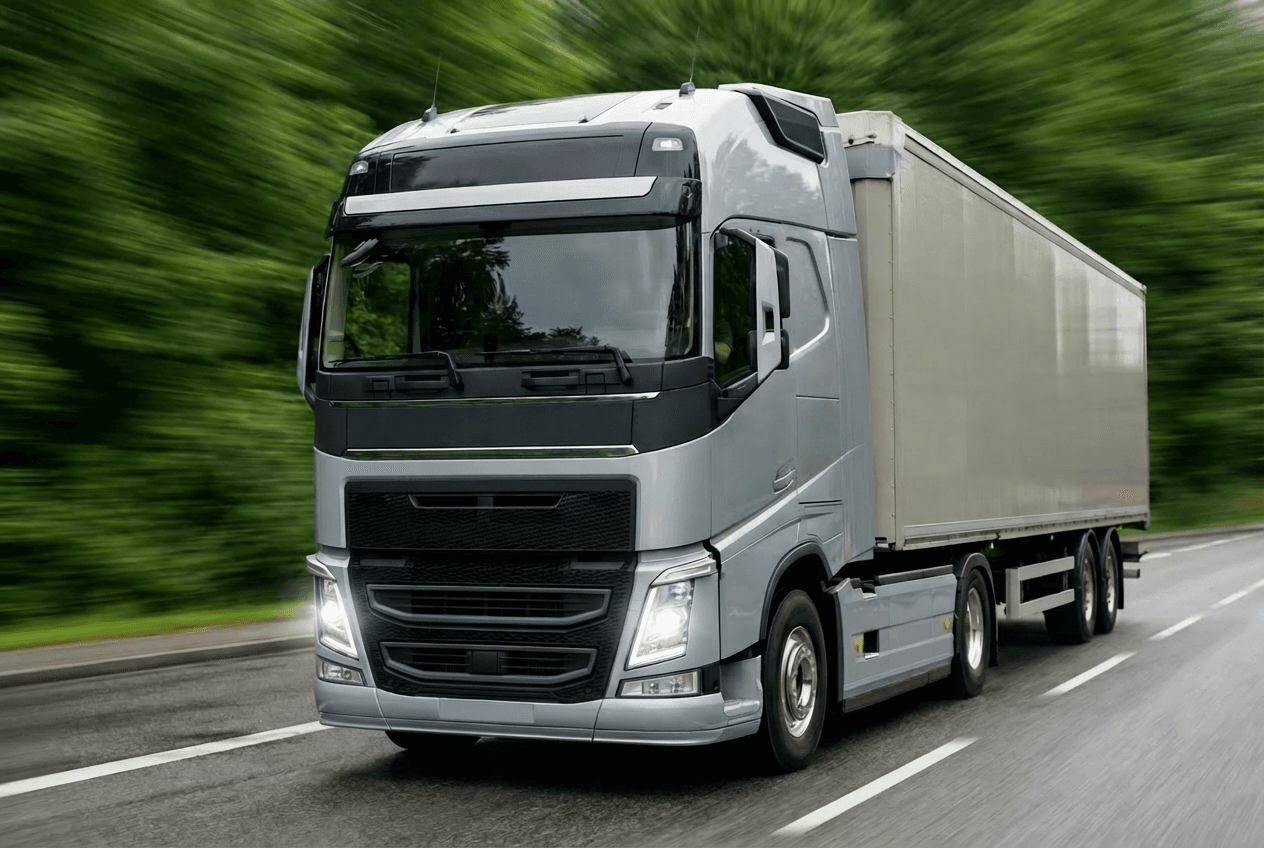
From compact two-wheelers to passenger vehicles, commercial fleets and buses, Li Energy develops battery platforms designed around performance, safety, durability and real-world vehicle requirements.

Coverage

2W to Heavy Duty

Electrochemistry

LFP & High-Voltage LMFP

Thermal Architecture

<2.5°C Microchannel Liquid

Integration

End-to-End OEM Co-Design
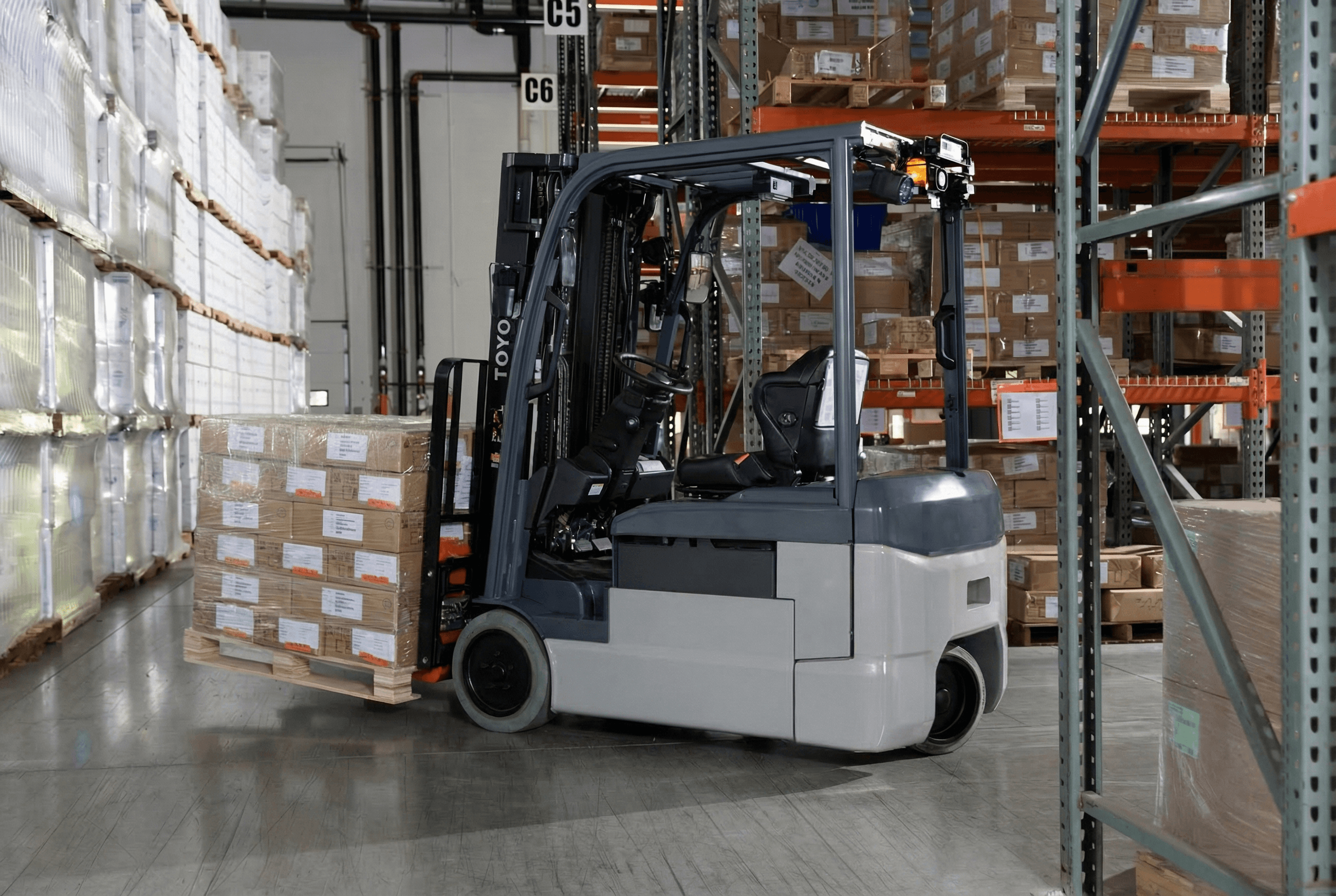
Urban & Light Electric Mobility
01. Urban & Light Mobility

Urban & Light Mobility Solutions

Smart, high-durability battery systems for two-wheelers, three-wheelers, last-mile delivery fleets, and passenger cars engineered for rigorous daily urban duty cycles.

2W
012W

Electric Two-Wheelers

SCOOTERS • MOTORCYCLES • FLEET VEHICLES

View→
3W / L5
023W / L5

Electric Three-Wheelers

PASSENGER VEHICLES • CARGO VEHICLES • L5 PLATFORMS

View→
LCV
03LCV

Light Commercial Vehicles

COMMERCIAL & LAST-MILE LOGISTICS

View→
Commercial & Heavy Electric Mobility
02. Commercial & Heavy Mobility

Commercial, Transit & Heavy Mobility

High-capacity, liquid-cooled battery architectures designed for city buses, industrial forklifts, heavy duty logistics, and specialized off-highway equipment.

BUS
01BUS

Electric Buses

HEAVY-DUTY ELECTRIC MOBILITY

View→
INDUSTRIAL
02INDUSTRIAL

Industrial & Specialty Vehicles

SPECIALISED ELECTRIC VEHICLES

View→
Passenger Electric Mobility
03. Passenger Mobility

Passenger Mobility

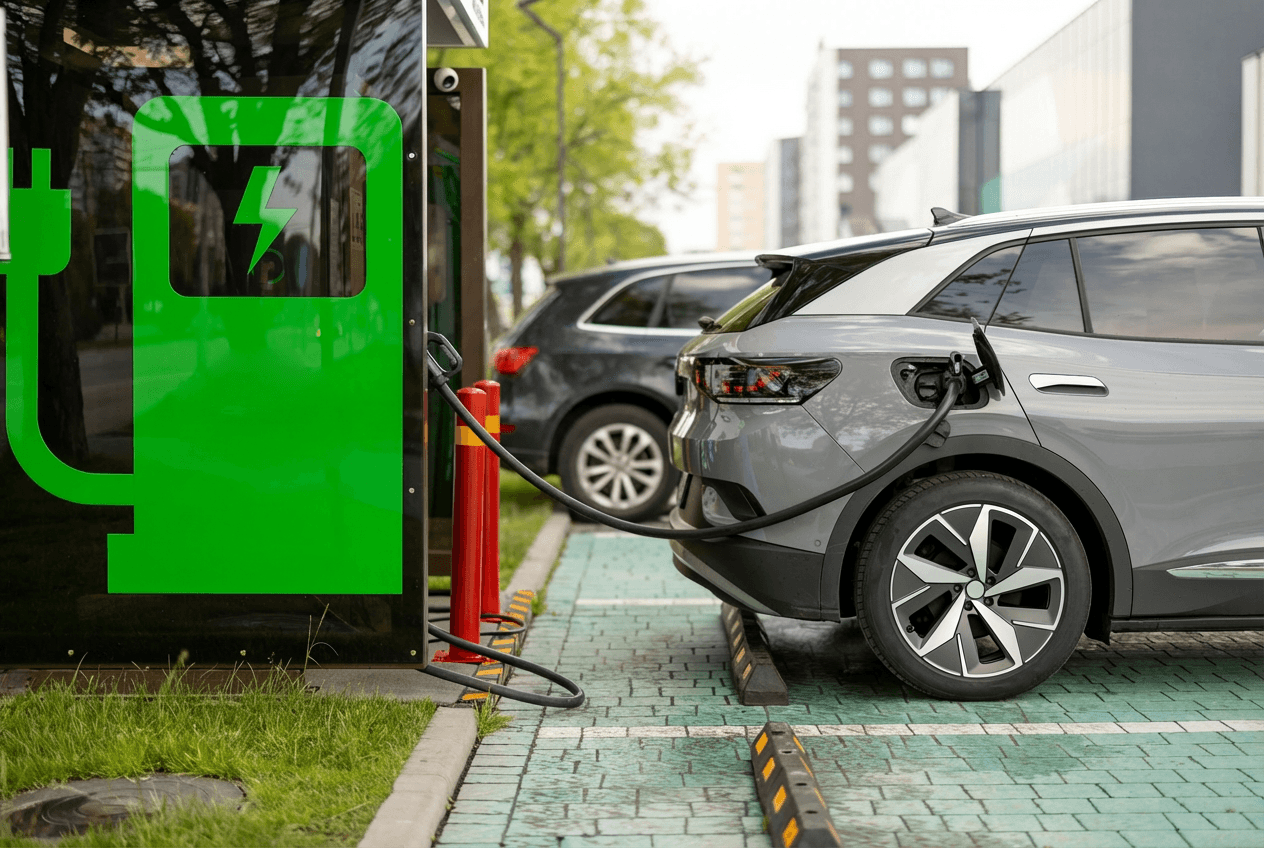
Automotive-grade battery pack platforms engineered around high safety, packaging, and performance standards of modern electric cars.

4W
014W

Electric Four-Wheelers

PASSENGER CARS • SEDANS • SUVS

View→

Application Architecture

Selected • 4WElectric Sedans • SUVs • Hatchbacks • Passenger EVs

Electric Four-Wheelers

PASSENGER CARS • SEDANS • SUVS

Platform Overview

Advanced battery systems engineered for passenger electric vehicles with high energy density, safety, range, and long-term everyday performance.

Engineered Around
  • High-Energy Cell Chemistry
  • Advanced Thermal Management
  • Intelligent Automotive BMS
  • High-Voltage Pack Architecture
  • Structural Pack Integration

We Engineer the Complete System.

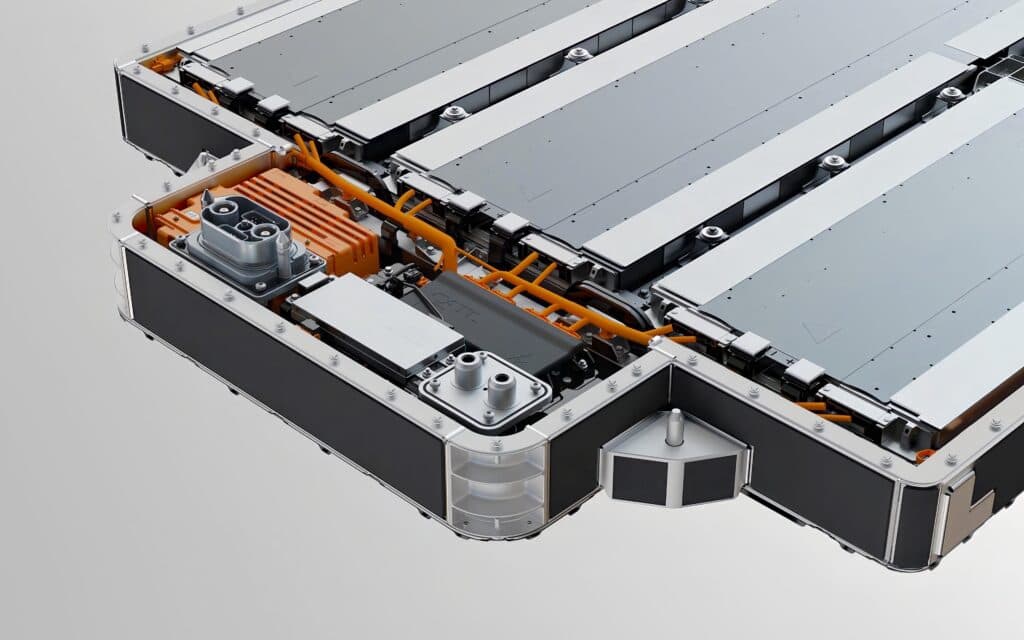
An EV battery is much more than a collection of cells. Every Li Energy mobility platform is engineered as an integrated, multi-tier system from atomic electrochemistry to cloud telemetry.

LAYER 01 INTEGRATION

Cells

Electrochemical Foundation

Cell selection and chemistry are tailored strictly around application duty cycles to achieve optimal trade-offs.

Core Engineering Focus & Controls:

Energy density optimization
Continuous & peak power capability
Extended electrochemical cycle life
Temperature behavior & safety limits
Fast charging acceptance
Commercial lifecycle economics
Automotive Standards: AIS-038 / AIS-156 / UN 38.3Step 1 of 4

The Right Chemistry for the Right Vehicle.

Different mobility applications require different combinations of energy, power, safety, life and cost. Li Energy’s mobility technology platform is primarily focused around advanced lithium-ion chemistries:
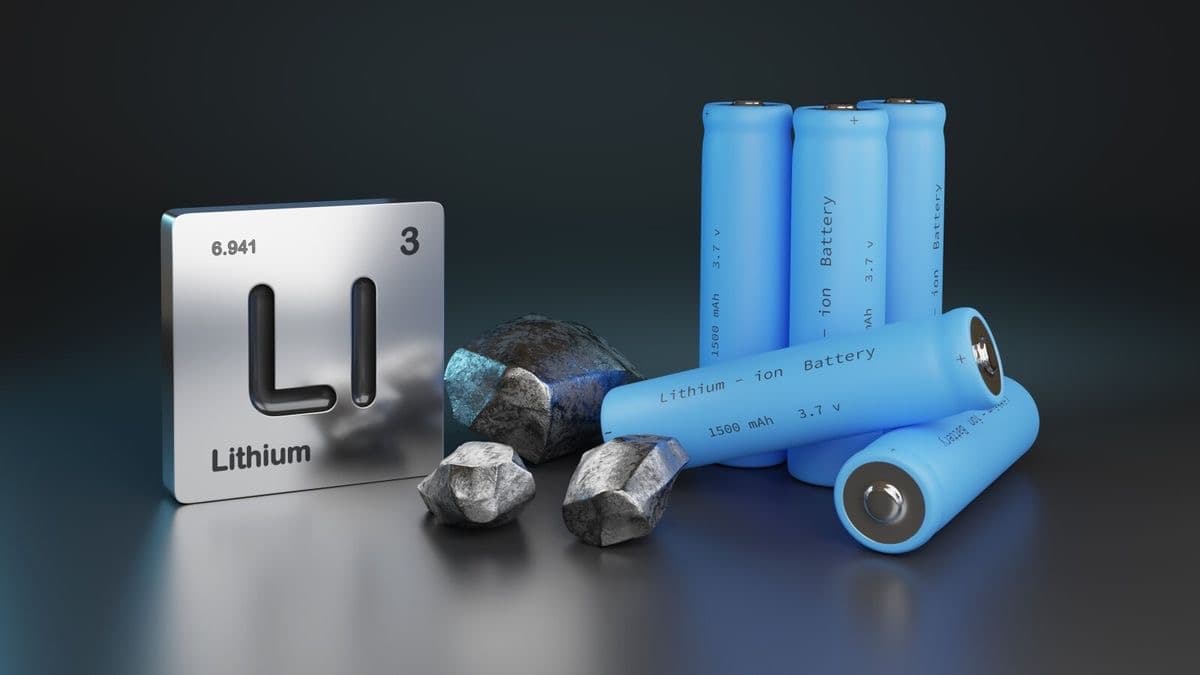
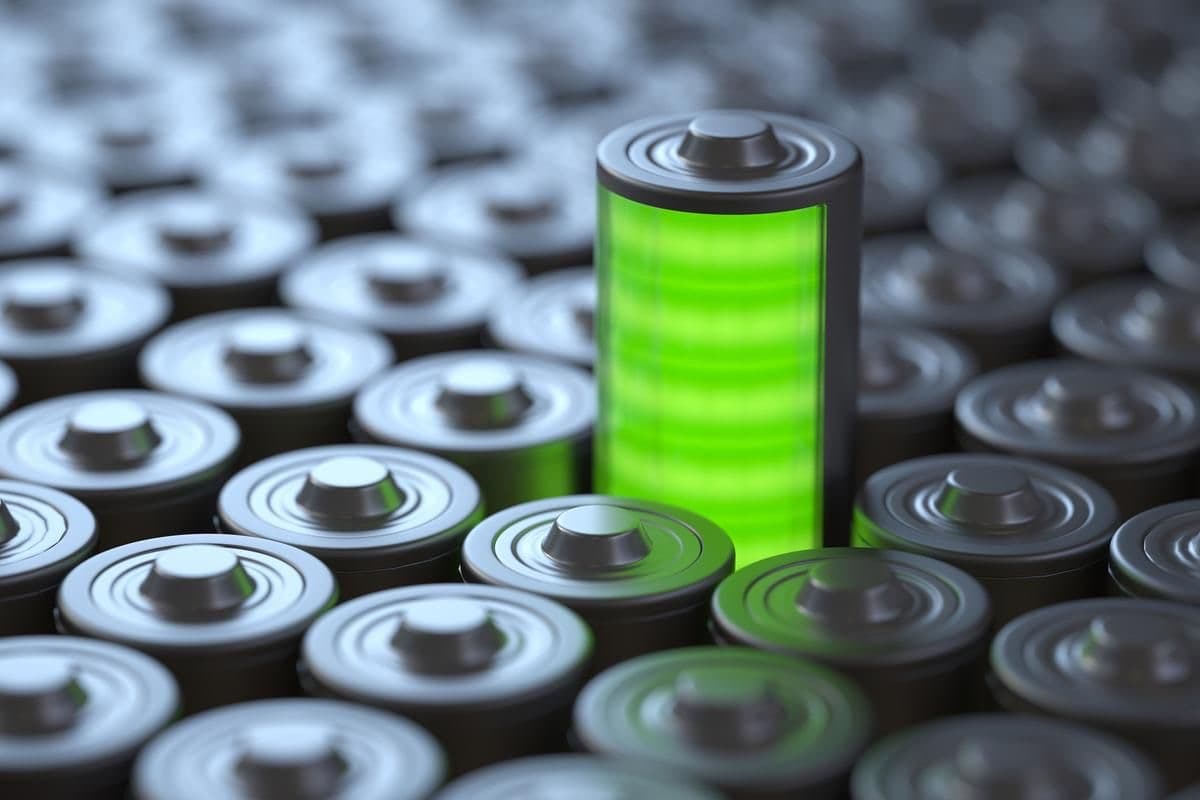
Lithium element tile beside LFP cylindrical battery cells
Cell Stack CAD
Prismatic Cell Assembly & Compressive RigZero Swell Tolerance
LFP

Lithium Iron Phosphate

Lithium-Ion

The Benchmark for Thermal Stability & Heavy Utilization

Cycle Life Target

4,000 – 6,000+ Cycles

Thermal Stability Limit

>270°C Safe

Chemistry Profile

Cobalt & Nickel Free

Key Strength

Uncompromising Safety & TCO

Operational Strengths:

  • Excellent thermal stability and zero oxygen release under abuse
  • Exceptional longevity supporting multiple daily fast-charge cycles
  • Stable economics free from volatile cobalt and nickel pricing
  • Ideal for electric two-wheelers, three-wheelers, delivery fleets, and buses
LFPDeep Technical Dive

Lithium Iron Phosphate

Renowned for its exceptionally stable olivine crystal structure, LFP resists thermal runaway even under mechanical or electrical abuse. It delivers outstanding cycle life and unmatched cost efficiency for daily commercial fleets.

Engineering Architecture & Mechanism:

Olivine Crystal Structure

Octahedral FeO₆ and tetrahedral PO₄ units form strong covalent P-O chemical bonds that prevent oxygen release up to >270°C, eliminating thermal runaway risk.

Thermal Stability & Abuse Tolerance

Exceptional intrinsic stability under nail penetration, mechanical crush, and severe electrical overcharge without hazardous self-sustaining combustion.

Cycle-Life & Fleet TCO

Maintains >80% State of Health across 4,000–6,000+ full 1C charge/discharge cycles, maximizing operational return on investment across multi-shift commercial fleets.

Ethical Supply & Predictable Cost

Completely free from volatile cobalt and nickel supply chains, ensuring long-term price stability and responsible automotive procurement.

Application Suitability

Engineered for high-utilization duty cycles: delivery 2W/3W, intra-city logistics vans, transit buses, and stationary buffer storage.

The Benchmark for Thermal Stability & Heavy Utilization
LMFP

Lithium Manganese Iron Phosphate

Lithium-Ion

Next-Generation High-Voltage Phosphate Chemistry

Nominal Voltage

3.7V (vs 3.2V LFP)

Energy Density Gain

+15% to +20%

Safety Classification

Phosphate-Grade Safety

Key Strength

Extended Range & Lightweighting

Operational Strengths:

  • Higher cell operating voltage delivering greater volumetric energy density
  • Preserves intrinsic thermal safety and low thermal runaway risk
  • Enables longer vehicle driving range without packaging penalty
  • The optimal future-proof choice for passenger cars and light commercial vehicles
LMFPDeep Technical Dive

Lithium Manganese Iron Phosphate

By incorporating manganese into the phosphate crystal lattice, LMFP boosts nominal cell voltage from 3.2V to 3.7V. This unlocks up to 15–20% higher energy density while retaining the thermal safety and non-combustible properties of LFP.

Engineering Architecture & Mechanism:

Manganese Lattice Incorporation

Manganese doping activates the Mn²⁺/Mn³⁺ redox couple at 4.1V vs. Li/Li⁺, raising the overall nominal cell discharge plateau from 3.2V to 3.7V.

15% to 20% Energy Density Gain

The 3.7V plateau yields gravimetric energy density up to 220–240 Wh/kg, bridging the gap between LFP economics and NMC range performance.

Phosphate-Grade Safety Retention

Maintains the robust polyanion framework of LFP with surface carbon bridging to prevent manganese dissolution during rapid cycling.

Vehicle Range & Lightweighting

Unlocks greater vehicle driving range per pack volume without pack-weight penalties, reducing parasitic thermal and structural loads.

Application Suitability

The ideal platform for passenger electric cars, urban crossover SUVs, and long-range light commercial vehicles (LCVs).

Next-Generation High-Voltage Phosphate Chemistry

Performance Starts With Temperature.

Battery performance, life and safety are directly influenced by temperature. Li Energy designs thermal-management architecture according to vehicle power, environmental conditions and operating requirements.
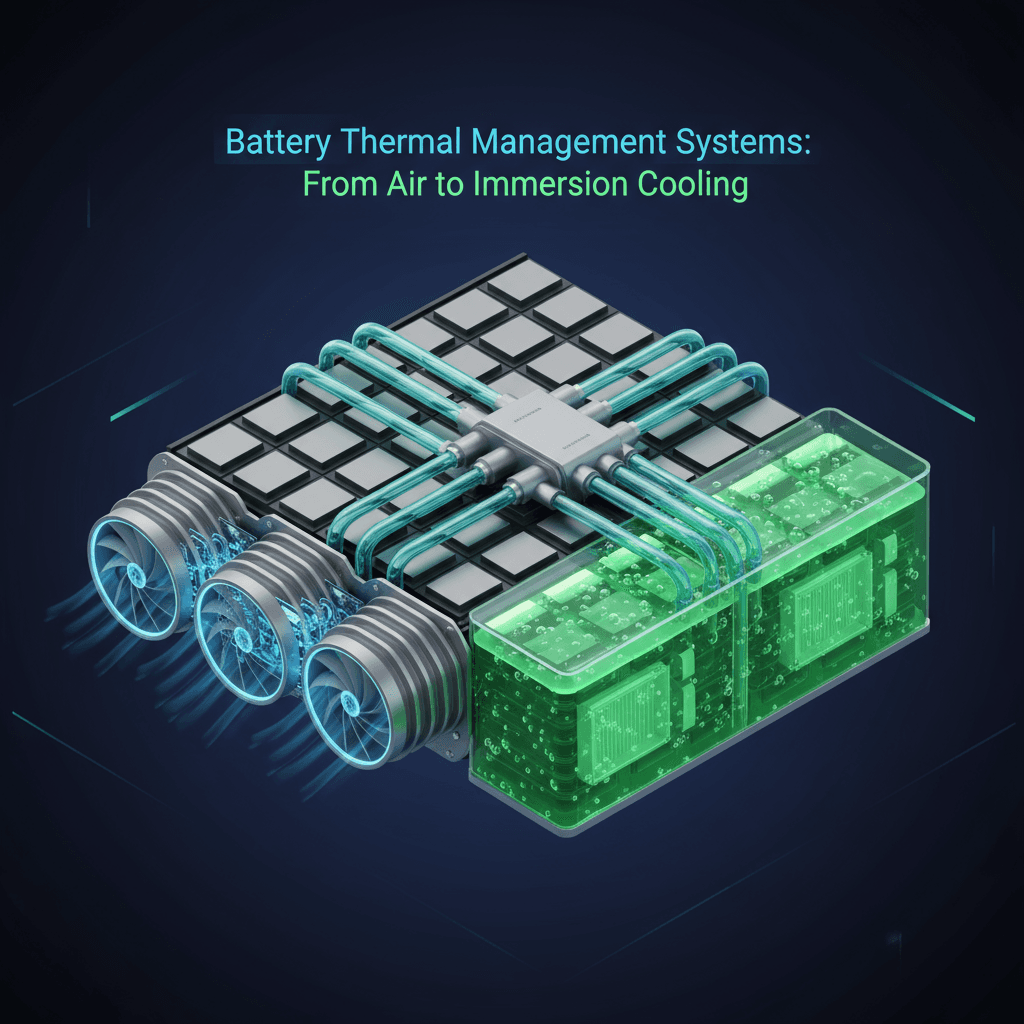
Battery thermal management systems from air to immersion cooling
Active Thermal CFD
Serpentine Liquid Channel & Chiller CircuitΔT < 3°C Cell-to-Cell

Not the Other Way Around.

Every vehicle platform is different. That is why Li Energy develops battery systems around the individual requirements of an OEM, optimizing across 10 mission-critical vehicle parameters:
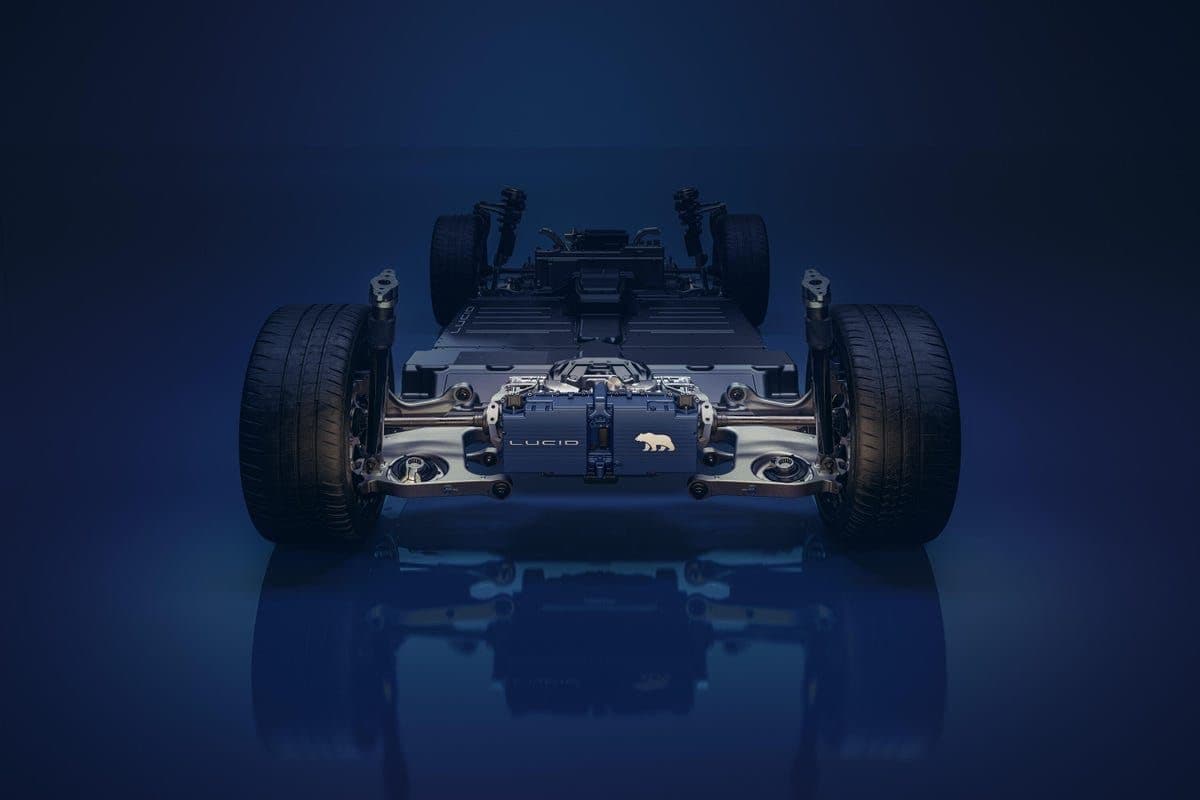
EV Skateboard Chassis and Underbody Battery Packaging CAD Model
Vehicle CAD Model
Skateboard Chassis & Crash ProtectionCell-to-Pack Integration
011 / 10

Vehicle Architecture

Chassis integration, suspension clearance, and crash load paths.

Have a custom vehicle packaging constraint?

Our engineering team works directly with your CAD and powertrain files under NDA.

Consult with Pack Engineers

An End-to-End OEM Development Process.

From the initial concept brief through prototype validation, automotive certification, and scalable series manufacturing:
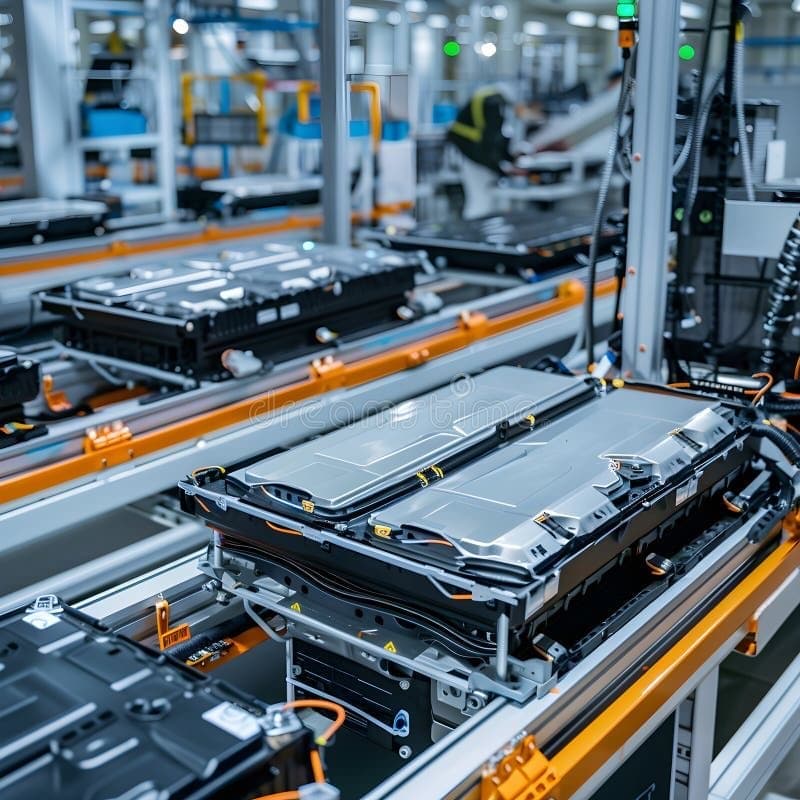
Automated Robotic Pack Assembly and Series Manufacturing Line
Production Assembly
Cleanroom Line VerificationIATF 16949
Robotic Cell Sorting & Laser Welding100% EOL Tested
Phase 08

Mass Production

Stage 8 of 8

Scalable automated battery pack manufacturing for series vehicle commercial programs.
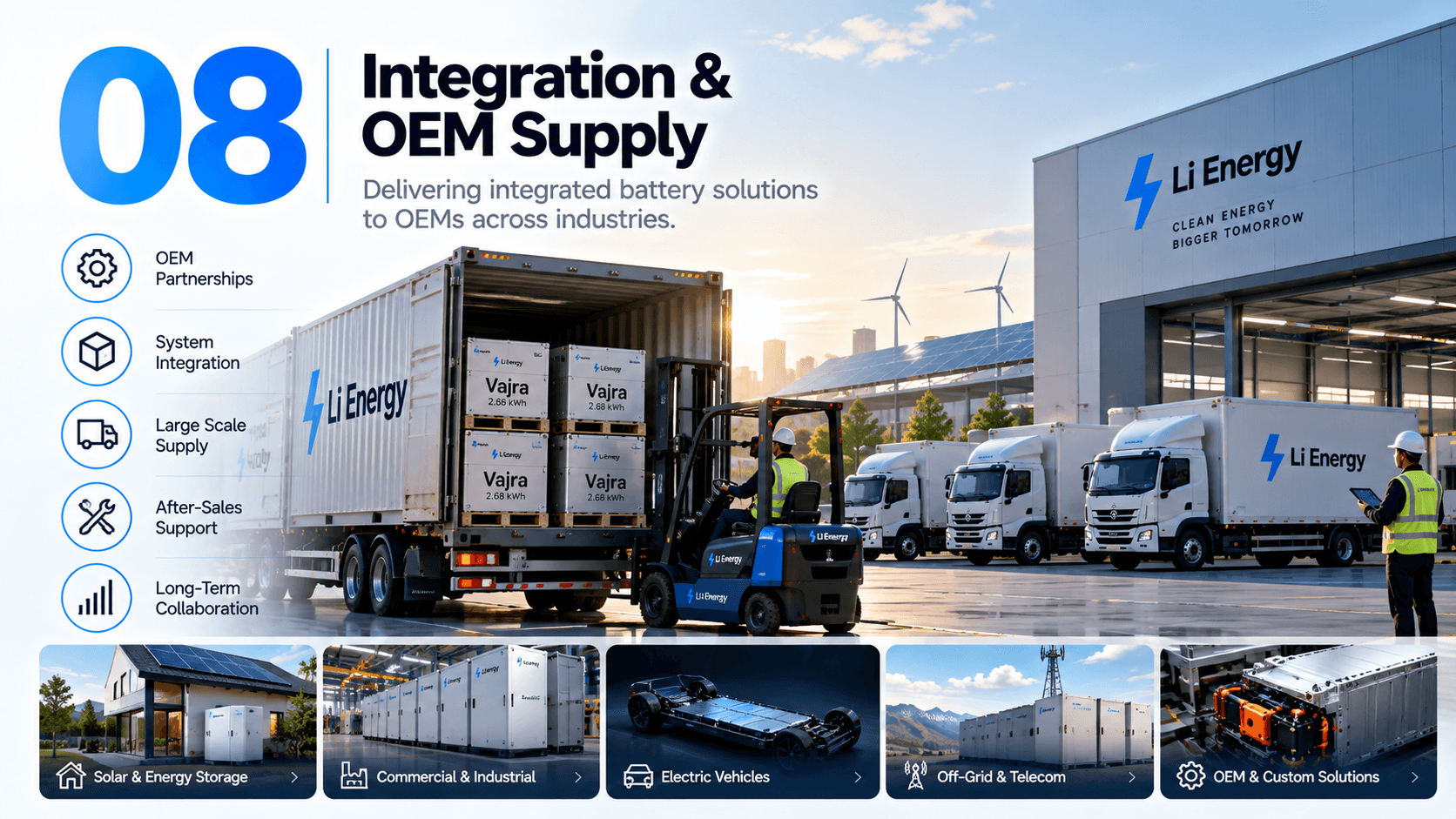
Mass Production
Phase 07

Pilot Production

Stage 7 of 8

Controlled manufacturing runs to validate assembly tooling, line jigs, and quality protocols.
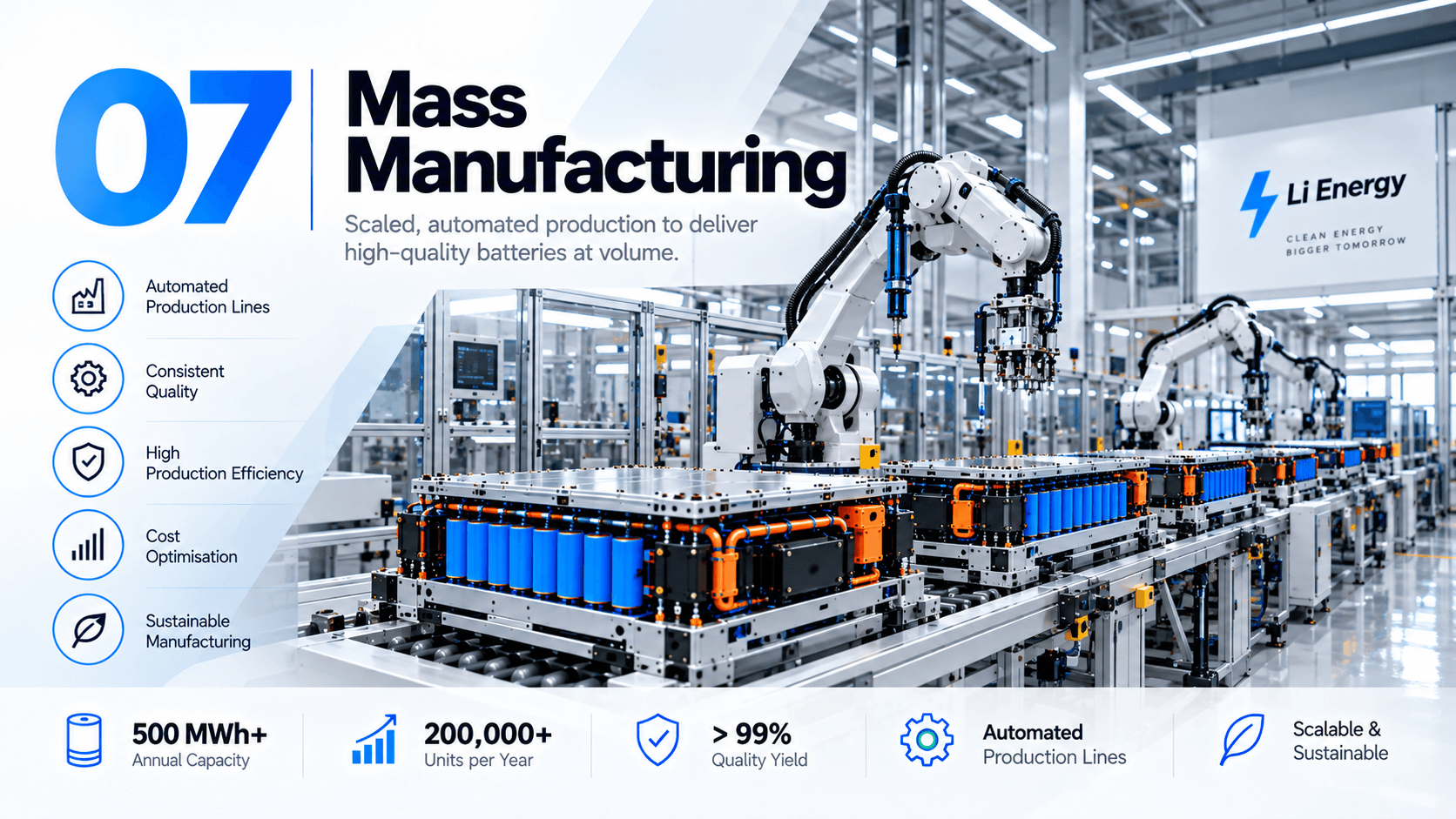
Pilot Production
Phase 06

Certification

Stage 6 of 8

Automotive regulatory and homologation testing (AIS-038/AIS-156, UN 38.3, ECE R100).
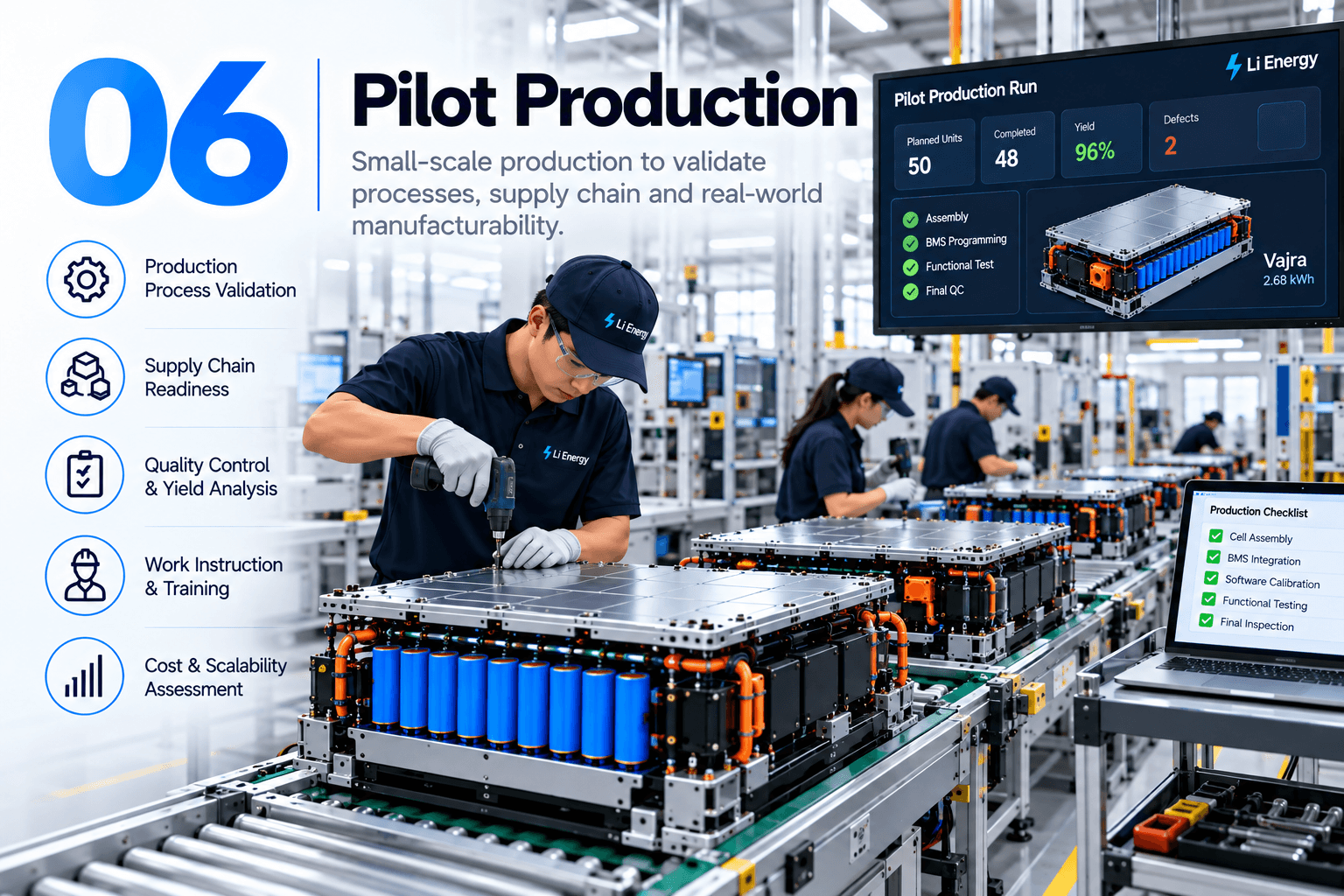
Certification
Phase 05

Testing & Validation

Stage 5 of 8

Battery systems undergo rigorous electrical, environmental, vibration, and safety testing.
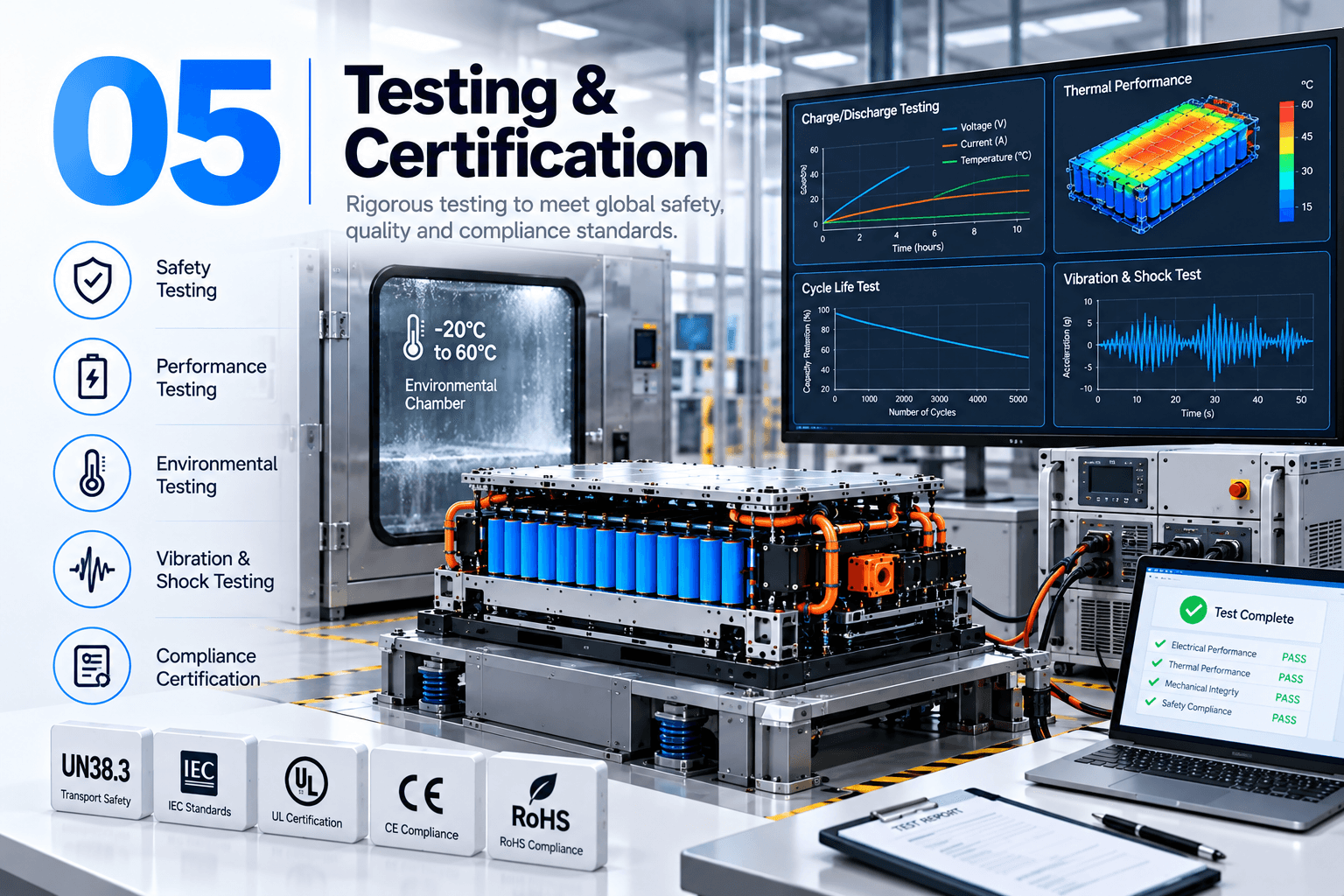
Testing & Validation
Phase 04

Prototype Development

Stage 4 of 8

Development of functional battery prototypes for physical vehicle integration and track trials.
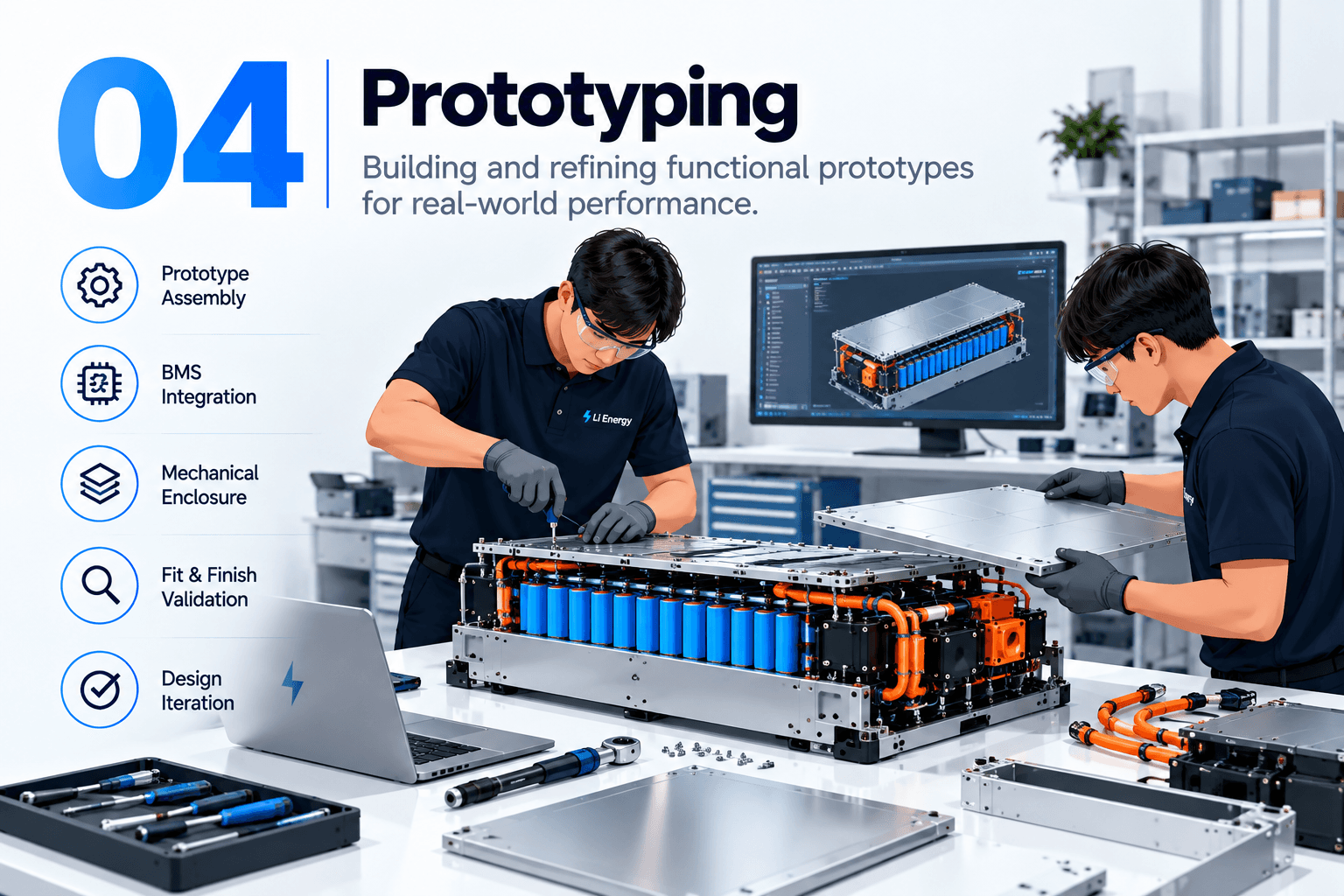
Prototype Development
Phase 03

Engineering & Simulation

Stage 3 of 8

Mechanical, electrical and thermal simulation (FEA, CFD) of the complete battery system.
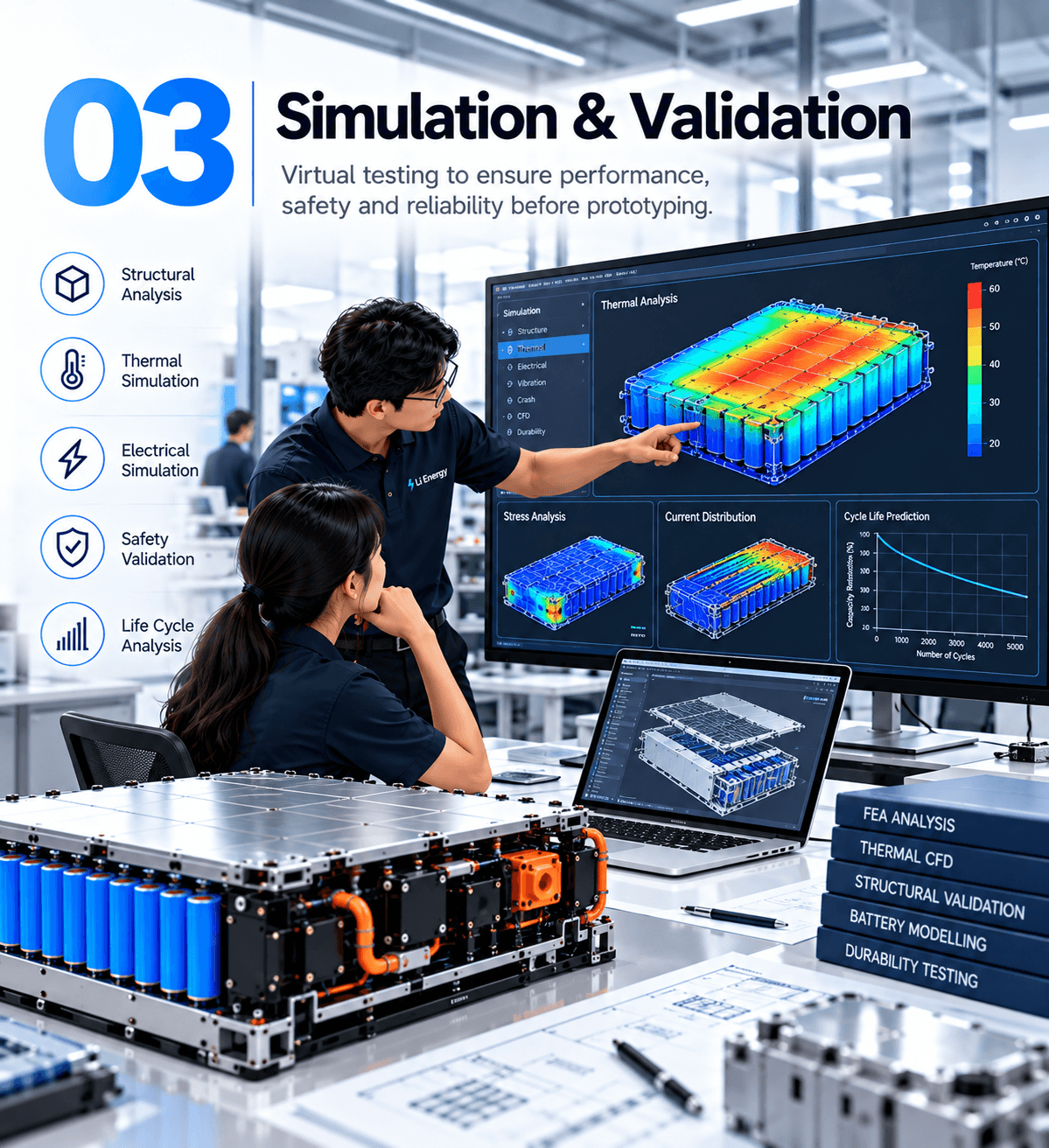
Engineering & Simulation
Phase 02

Battery Architecture

Stage 2 of 8

Cell chemistry, voltage, capacity, module architecture, pack design and BMS configuration.
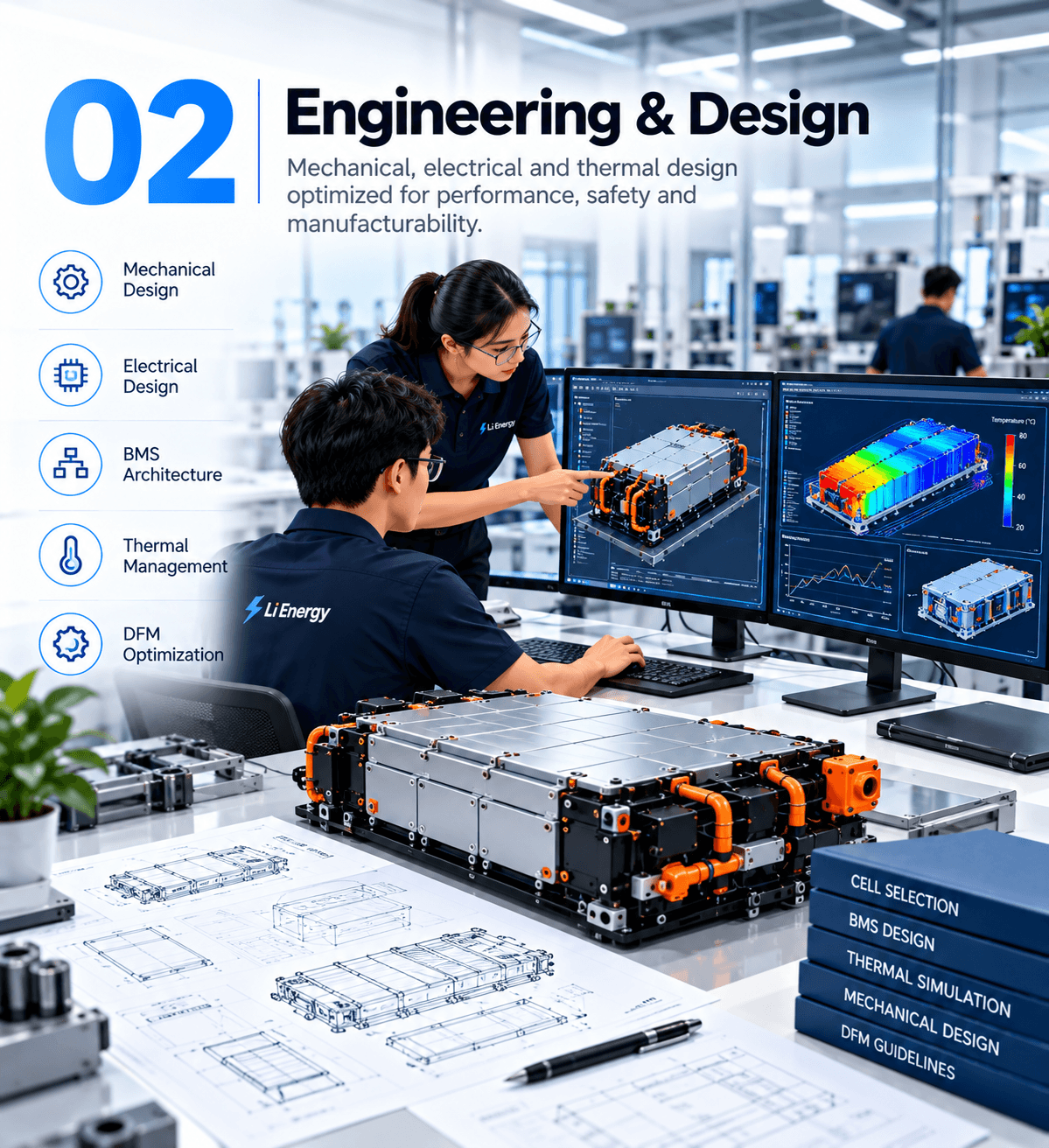
Battery Architecture
Phase 01

Vehicle Requirements

Stage 1 of 8

Understanding vehicle architecture, performance targets, range, duty cycle and operating conditions.
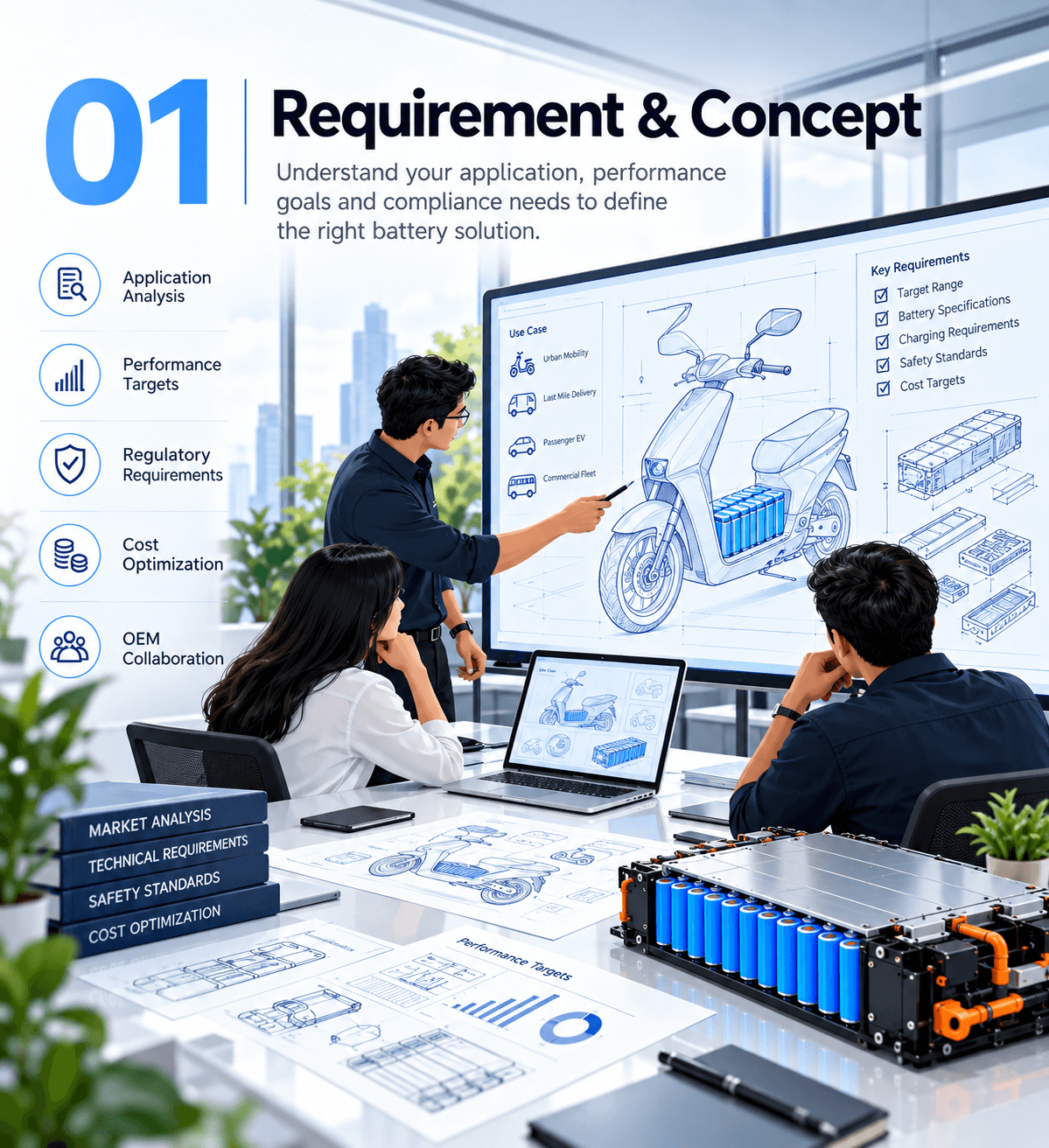
Vehicle Requirements

Built for Real Indian & Global Road Realities.

Electric vehicles operate in environments that are far more demanding than laboratory conditions. Li Energy battery systems are engineered around challenges including:

Up to +55°C

HEAT

High Ambient Performance

Engineered to deliver consistent output without thermal derating under harsh tropical summer temperatures up to +55°C.

01 / 06Explore
Rough Road Rig

VIBRATION

Rigid Structural Architecture

Robust internal busbars, structural bonding, and potted electronics withstand continuous rough road shocks and potholes.

02 / 06Explore
IP67 & IP69K

WATER & DUST

Hermetic Ingress Protection

Automotive-grade compression gaskets and pressure equalization valves deliver complete IP67 and IP69K sealed protection.

03 / 06Explore
High C-Rate

HIGH CURRENT

High-Rate Surge Handling

Low-resistance copper busbars and high-capacity contactors handle continuous high-torque acceleration and regen surges.

04 / 06Explore
Multi-Shift

DAILY CYCLING

Commercial Duty Endurance

Cell mechanical compression and advanced electrolyte formulation prevent accelerated capacity fade during multiple daily charges.

05 / 06Explore
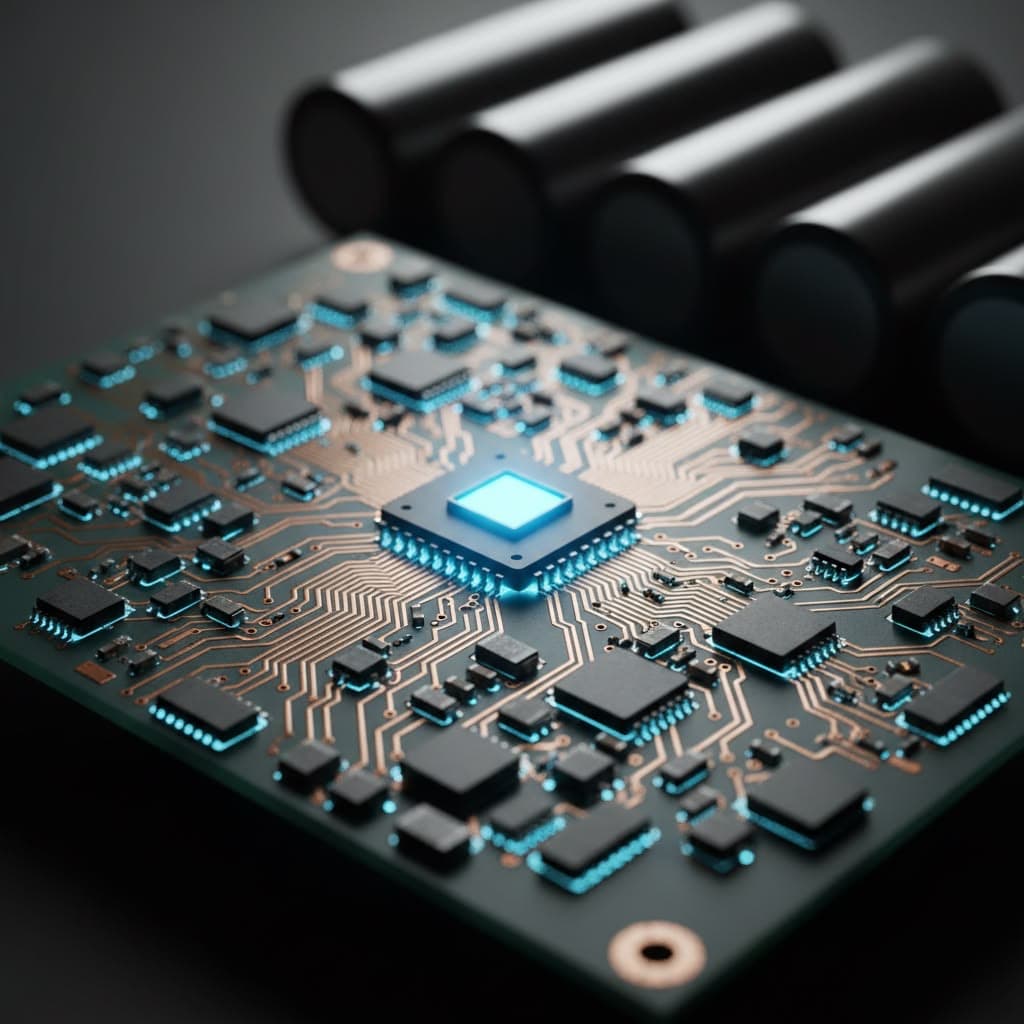
Zero Propagation

SAFETY

Multi-Tier Protection

Multi-layered mechanical, thermal, electrical, and firmware failsafes guarantee zero thermal propagation.
06 / 06Explore
Edge BMS Battery Software & Intelligence
09.1 Edge BMS Architecture

Onboard Battery Intelligence & Control

High-speed microsecond telemetry and active edge computation integrated directly within the vehicle's battery management system.

Real-Time Battery Monitoring01

Real-Time Battery Monitoring

Microsecond Cell Telemetry

View→
State-of-Health Analytics02

State-of-Health Analytics

Adaptive Aging & Capacity Tracking

View→
Instant Fault Diagnostics03

Instant Fault Diagnostics

Automated Edge Isolation

View→
Dynamic Charging Behavior04

Dynamic Charging Behavior

Temperature-Adaptive Charging Curve

View→
Cloud Telemetry Battery Software & Intelligence
09.2 Cloud Telemetry Architecture

Cloud Analytics & Fleet Intelligence

Enterprise cloud IoT integration transforming individual battery telemetry into actionable fleet-level analytics, safety trends, and predictive maintenance.

Temperature Trends & Early Warning05

Temperature Trends & Early Warning

Thermal Anomaly Detection

View→
Cell Performance Balancing06

Cell Performance Balancing

Active & Passive Millivolt Trimming

View→
Usage History & Duty Logging07

Usage History & Duty Logging

Black-Box Non-Volatile Memory

View→
Fleet-Level Insights & OTA08

Fleet-Level Insights & OTA

Cloud IoT Telemetry Engine

View→
OEM Integration Vehicle OEM Integration
10. OEM Co-Engineering

Co-Engineered for Vehicle Manufacturers

Li Energy works directly with electric vehicle OEMs from platform packaging concept through prototype validation, AIS homologation, and turnkey volume manufacturing.

Flexible ArchitecturePillar 01

Flexible Architecture

48V to 800V+ Modular Form Factor

View→
Scalable ManufacturingPillar 02

Scalable Manufacturing

Automated Series Production Lines

View→
Local Engineering & TestingPillar 03

Local Engineering & Testing

On-the-Ground R&D & Certification

View→
Supply Chain & Lifecycle SupportPillar 04

Supply Chain & Lifecycle Support

Domestic Localization & Circularity

View→
ONE TECHNOLOGY PLATFORM

From Two Wheels to Heavy Mobility.

Unified cell, module, thermal, and BMS architecture adaptable across the full mobility spectrum.

2W

Electric Scooters & Motorcycles

3W / L5

Passenger & Cargo Platforms

LCV

Commercial & Last-Mile Logistics

PASSENGER EV

Automotive Battery Platforms

BUS

Heavy-Duty Electric Mobility

INDUSTRIAL

Specialised Electric Vehicles

BUILD YOUR NEXT EV WITH LI ENERGY

Build Your Next EV With Li Energy.

Whether developing a new electric vehicle platform or transitioning an existing vehicle to electric propulsion, Li Energy can work alongside OEM engineering teams from battery concept through production.

Tell us about your vehicle requirements.

LI ENERGY • Engineering the Complete Battery Ecosystem